What Is Payment Orchestration? Everything You Need to Know
A comprehensive technical, financial, and operational guide to multi-processor payment architectures for scaling global enterprise brands.
Read Strategy
A comprehensive technical, operational, and regulatory guide to securing cardholder data and achieving PCI DSS compliance for e-commerce brands.
For online businesses operating in today's global digital economy, safeguarding sensitive customer payment data is both a critical security requirement and a mandatory legal obligation. Whenever a web application collects, transmits, or processes payment card details, it enters the scope of the Payment Card Industry Data Security Standard (PCI DSS)—a rigorous security benchmark established by major card brands (Visa, Mastercard, AMEX, Discover, and JCB).
In 2026, PCI DSS v4.0 represents the global active operational baseline for all digital commerce organizations. This upgraded framework shifts compliance from a passive once-a-year checklist into a continuous, targeted security model. Failing to adhere to these standards exposes online merchants to severe financial penalties, elevated chargeback rates, card network bans, and catastrophic data breaches that can destroy brand credibility overnight.
At TY ALPHA, TECHNOLOGY, we specialize in building fast, secure, and fully customized web development and payment infrastructure solutions. We have created this practical operational guide to clarify PCI DSS compliance levels, explain scope-reduction integration strategies, break down technical requirements, and outline a step-by-step roadmap to audit readiness.
If you need professional assistance auditing your checkout security, reducing your PCI compliance scope using tokenized iFrames, or engineering fully compliant payment API pipelines, our technical team is ready to help. Simply click the link at the bottom of the page to connect with our solution specialists.

The PCI DSS framework organizes cardholder data protection across six objectives containing twelve core technical requirements:
Achieving PCI compliance is an essential operational investment that directly protects your bottom line. Non-compliance carries severe financial and reputational repercussions that far outweigh the cost of implementing robust security controls.
Card networks assess non-compliance fines ranging from $5,000 to $100,000 per month directly to acquiring banks, which pass these costs down to the merchant. In the event of a cardholder data breach, non-compliant businesses face mandatory forensic audit fees, customer compensation claims, increased per-transaction processing fees, and potential revocation of merchant processing privileges.
At TY ALPHA, TECHNOLOGY, we help enterprise businesses design scope-minimized architectures that cut compliance overhead, lower audit costs, and protect merchant processing agreements.
Selecting the right payment integration architecture determines your merchant compliance scope and Self-Assessment Questionnaire (SAQ) level:
| SAQ Category | Integration Method | Technical Storage & Handling | Compliance Burden & Audit Scope |
|---|---|---|---|
| SAQ A | Hosted Payment Pages, Hosted iFrames, or Drop-in SDKs. | Zero card data stored, processed, or transmitted on merchant servers. | Lowest Burden; ~30 requirements focusing primarily on script integrity (PCI 4.0). |
| SAQ A-EP | Custom frontend forms posting via client JS APIs to gateway. | No card data stored; frontend code impacts payment transaction channel. | Moderate to High; ~190 requirements covering frontend web server security. |
| SAQ D (Merchant) | Direct API integration / Custom direct server payment processing. | Card data transmitted through or stored directly on merchant servers. | Maximum Burden; All 240+ requirements + mandatory full QSA audit & vulnerability scans. |
| SAQ P2PE | Point-of-Sale (POS) hardware utilizing validated P2PE solutions. | Card details encrypted at hardware level before entering terminal networks. | Low Burden; Streamlined requirements for physical retail and omnichannel environments. |
The most efficient way to achieve PCI DSS compliance is to drastically minimize your Cardholder Data Environment (CDE) scope using modern payment tokenization and hosted micro-iframes.
By embedding hosted payment elements (e.g., Stripe Elements, Adyen Web Components, or Braintree Drop-in), sensitive card fields are rendered directly from the PCI-compliant payment provider's servers. The customer's browser sends card details straight to the gateway, returning an encrypted, single-use token to your application server. Under PCI DSS v4.0, online businesses using hosted fields must also implement strict Content Security Policies (CSP), script inventory controls, and tamper-detection mechanisms to prevent malicious payment form manipulation (Magecart attacks).
This scope-reduction architecture keeps your application server completely outside the CDE, allowing you to qualify for the streamlined SAQ A validation path.
Your annual validation requirements are determined by total transaction volume across a 12-month period.
Level 1 Merchants (processing over 6 million transactions annually) require an annual Report on Compliance (ROC) conducted by an independent Qualified Security Assessor (QSA). Level 2 through Level 4 Merchants (processing under 6 million transactions annually) can typically complete an annual Self-Assessment Questionnaire (SAQ) accompanied by a formal Attestation of Compliance (AOC) and quarterly ASV vulnerability scans.
To systematically evaluate, secure, and validate your online business for PCI DSS compliance, we follow a structured 6-step engineering methodology:
Identify all systems, databases, web applications, and network paths interacting with payment card data to map your exact Cardholder Data Environment (CDE).
Re-engineer payment flows using hosted iFrames or tokenized Drop-in components to qualify for SAQ A and drastically reduce compliance scope.
Configure TLS 1.3 encryption, implement Content Security Policy (CSP) headers, enforce MFA across admin tools, and deploy script integrity monitoring.
Execute quarterly external vulnerability scans using an Approved Scanning Vendor (ASV) and remediate identified network software vulnerabilities.
Complete the appropriate SAQ document (SAQ A, A-EP, or D) corresponding to your integration method and compile the formal Attestation of Compliance (AOC).
Establish automated log monitoring, annual penetration testing, and continuous security maintenance to ensure perpetual PCI DSS compliance.
Achieving PCI DSS compliance protects your e-commerce operations against costly security breaches, eliminates regulatory fines, and reinforces customer trust across every digital transaction.
Whether you need to reduce your CDE scope to SAQ A, update your checkout frontend for PCI DSS v4.0 script integrity standards, or build a custom tokenized payment architecture, our technical team is fully equipped to assist. The developer specialists at TY ALPHA, TECHNOLOGY excel at engineering lightning-fast, ultra-secure, and fully compliant web application architectures built for long-term commercial success.
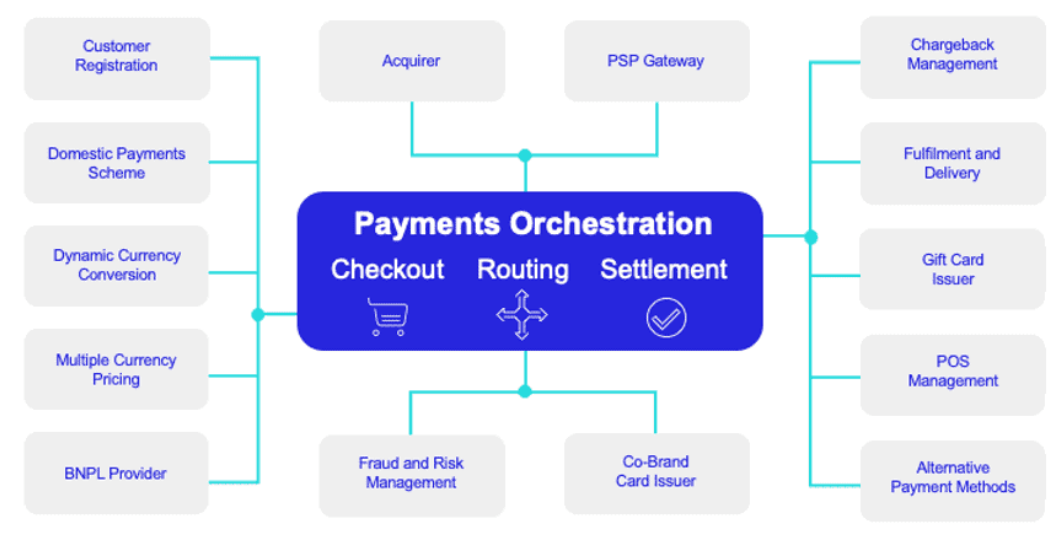
A comprehensive technical, financial, and operational guide to multi-processor payment architectures for scaling global enterprise brands.
Read Strategy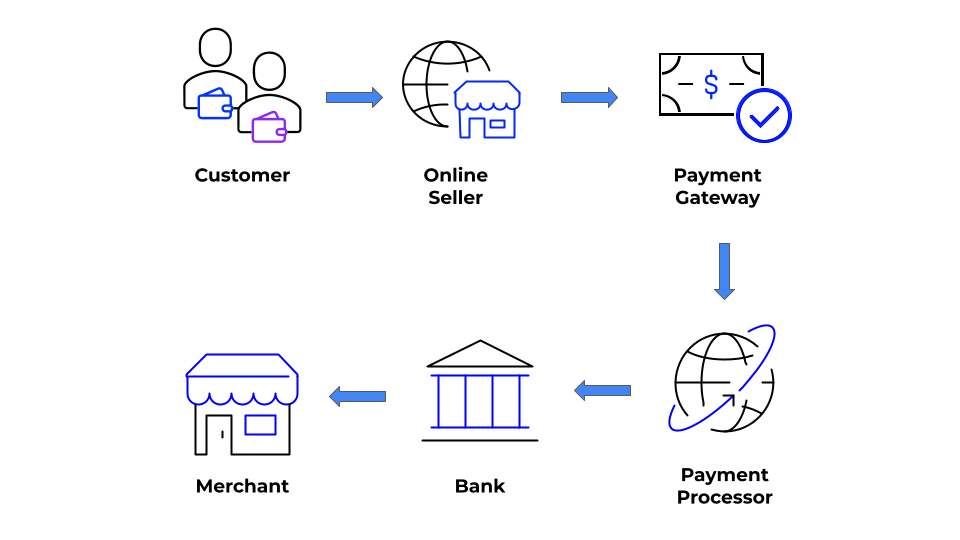
A comprehensive technical, financial, and operational guide to the data flows, authorization lifecycles, and security protocols powering digital transactions.
Read Strategy