Why Online Payments Matter More Than Ever in 2026
How businesses are adapting to faster, smarter, and more secure payment technologies.
Read Strategy
A detailed technical, structural, and operational breakdown of the critical roles played by payment gateways and payment processors in modern digital commerce.
In the fast-evolving world of global e-commerce, executing a seamless digital sale appears simple on the surface: a customer clicks "Pay Now," receives an order confirmation, and the business fulfills the request. However, beneath the hood of every digital transaction lies a complex, highly secure, and multi-layered electronic ecosystem designed to transfer funds within milliseconds.
In 2026, many merchants and business operators frequently use the terms Payment Gateway and Payment Processor interchangeably. While both components are indispensable parts of the payment pipeline, they perform entirely different structural functions. Confusing their roles can lead to misinformed architecture choices, unexpected processing fees, and security compliance oversights.
At TY ALPHA, TECHNOLOGY, we specialize in building fast, secure, and fully customized web development and payment infrastructure solutions. We have crafted this comprehensive technical guide to clarify the precise operational differences between payment gateways and payment processors, helping you make informed decisions for your online business.
If you need professional assistance integrating secure payment gateways, configuring custom APIs, or optimizing your checkout payment pipeline, our technical team is ready to help. Simply click the link at the bottom of the page to connect with our solution specialists.
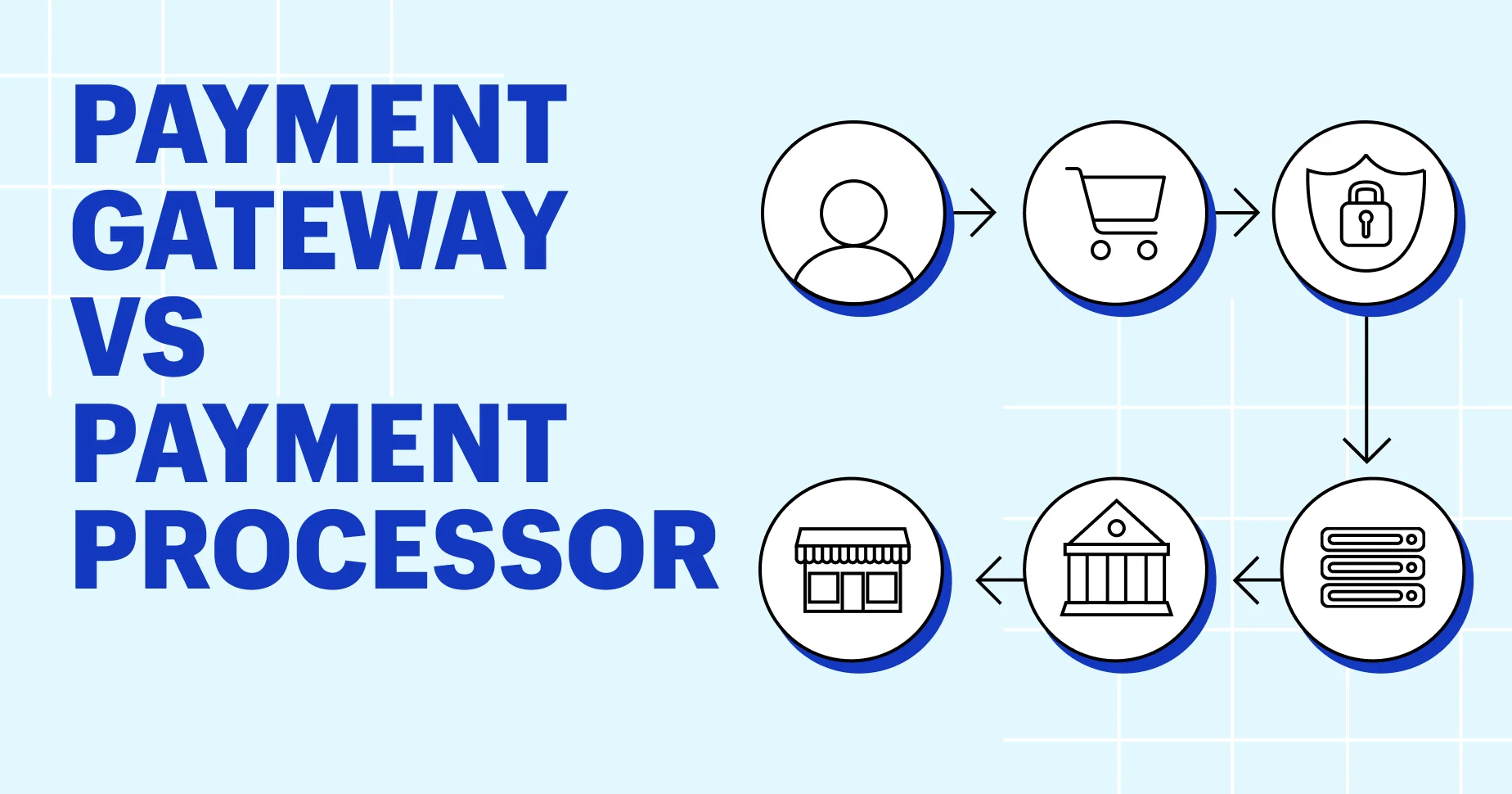
To understand how an online credit card or digital wallet payment works, we must separate the frontend communication layer from the backend banking settlement layer:
Understanding the distinction between gateways and processors directly impacts your business’s financial bottom line.
Payment gateways typically charge a monthly software licensing fee, a flat per-transaction communication fee (e.g., $0.05 to $0.10), or both. Payment processors, on the other hand, charge fees based on transaction volume, interchange fees established by card brands, and risk assessment margins (often structured as flat-rate, tiered, or Interchange-Plus pricing).
At TY ALPHA, TECHNOLOGY, we help digital enterprises audit their transaction fee breakdown, decoupling gateway communication costs from backend processing markups to negotiate maximum profitability.
Evaluating the technical, operational, and structural differences across key transactional parameters:
| Evaluation Parameter | Payment Gateway | Payment Processor |
|---|---|---|
| Primary Responsibility | Data capture, encryption, authorization routing, and security. | Transaction execution, authorization approval, and fund settlement. |
| Customer Interaction | Direct (Frontend checkout forms, hosted fields, digital wallets). | Indirect (Operates entirely in the background financial network). |
| Security Focus | PCI DSS compliance, SSL encryption, tokenization, AFDS anti-fraud. | Bank-level fund security, AML compliance, chargeback resolution. |
| Cost Structure | Fixed monthly gateway fees and/or small per-transaction flat fees. | Interchange fees, percentage-based volume fees, batch fees. |
| Example Entities | Authorize.net, NMI, CyberSource, Amazon Pay (Gateway features). | First Data (Fiserv), TSYS, Worldpay, Elavon. |
To see how gateways and processors collaborate in real time, consider the multi-step lifecycle executed during a single 2-second web checkout:
1. Capture & Encryption (Gateway): The customer enters card data; the gateway tokenizes and
encrypts the payload over HTTPS.
2. Routing (Gateway to Processor): The gateway forwards the secure tokenized request to the
merchant’s payment processor.
3. Network Clearance (Processor): The processor transmits the request through card networks
(Visa/Mastercard) to the customer’s issuing bank.
4. Approval & Response (Issuing Bank & Processor): The issuing bank verifies available funds
and returns an approval code to the processor.
5. Confirmation (Processor to Gateway): The processor sends the response back to the gateway,
which updates the merchant's checkout UI.
6. Settlement (Processor): Hours later, the processor executes batch settlement, transferring
funds from the issuing bank to the merchant acquiring account.
Selecting between an all-in-one platform (Stripe/PayPal) and a decoupled gateway/processor configuration depends heavily on your transaction scale.
Early-stage startups and small businesses often benefit from bundled PSPs due to instant setup and zero monthly software fees. However, growing enterprises processing over $50,000 monthly can achieve lower processing rates, custom fraud rules, and multi-processor redundancy by pairing an independent gateway (like NMI or Authorize.net) with a direct Interchange-Plus merchant processor account.
To systematically evaluate, select, and integrate your payment infrastructure, we execute a structured 6-step engineering methodology:
Analyze sales volume, geographic target markets, average order value (AOV), and subscription requirements.
Determine whether an all-in-one PSP or a standalone Gateway + Merchant Processor combination delivers maximum ROI.
Establish merchant IDs (MIDs), configure acquiring bank connections, and obtain API credentials.
Implement secure client-side SDKs, Accept.js, or hosted fields to handle card data without expanding PCI scope.
Develop server-side endpoints for transaction capture, refunds, automated webhooks, and database reconciliation.
Conduct end-to-end sandbox testing, audit SAQ PCI compliance status, calibrate fraud rules, and switch to live processing.
Understanding and optimizing the dynamic relationship between payment gateways and payment processors transforms payment handling from a routine expense into a high-converting, cost-efficient growth driver.
Whether you are selecting your first payment provider, migrating away from expensive flat-rate processors, or building custom API integrations, our engineering team is fully prepared to execute your setup. The developer specialists at TY ALPHA, TECHNOLOGY excel at building lightning-fast, highly secure, and revenue-optimized web solutions designed for scalable success.

How businesses are adapting to faster, smarter, and more secure payment technologies.
Read Strategy
How modern payment solutions are making global transactions faster, safer, and more accessible.
Read Strategy