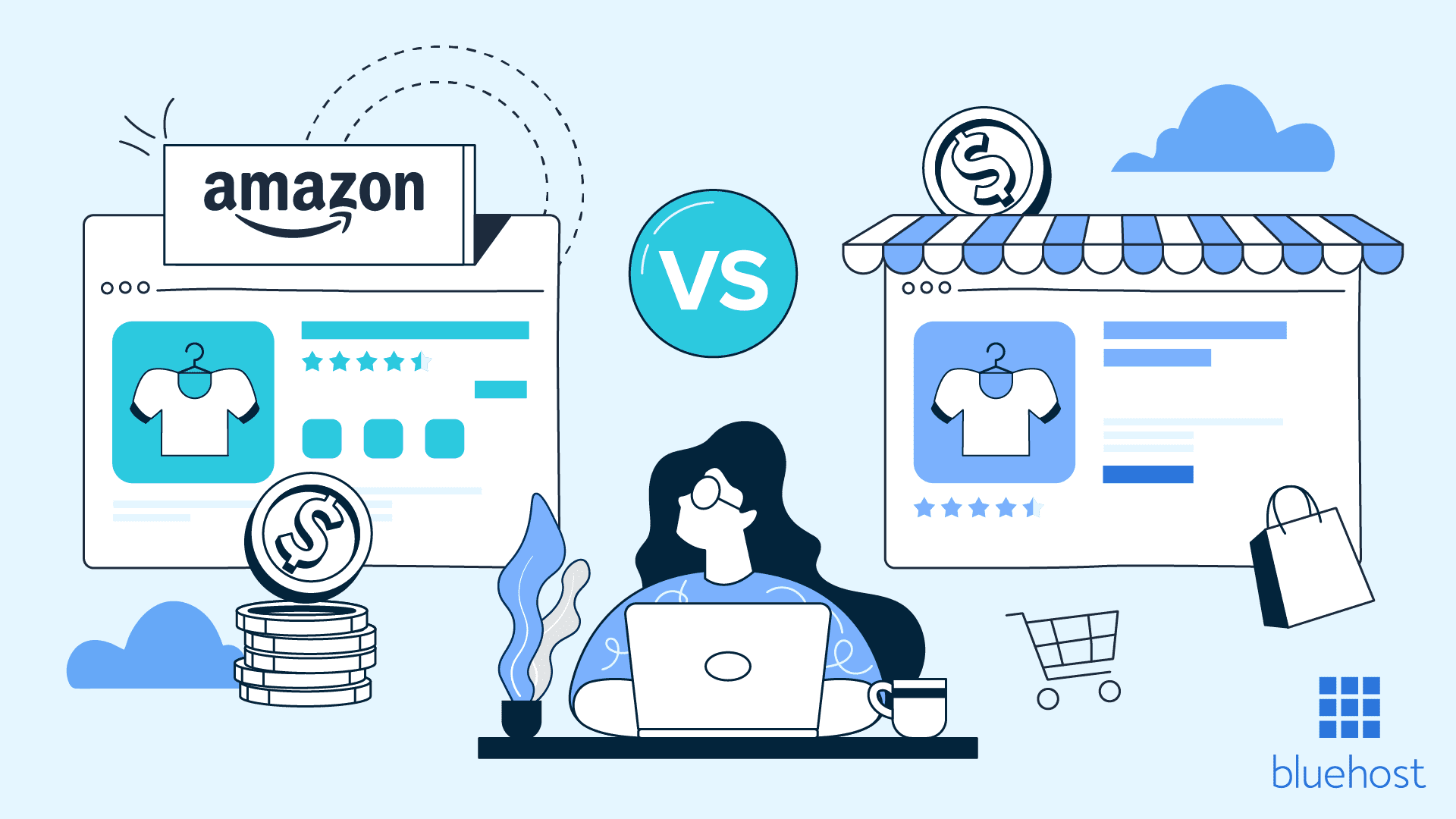
Owning Store vs Selling Amazon

    Compare brand control and customer data ownership between both sales models to determine which path secures your commercial autonomy.

    The Sovereignty Duel: Who Truly Controls Your Customers and Your Capital?

    When scaling an online retail business, the channel through which you interact with your audience dictates the valuation, security, and destiny of your enterprise. Many entrepreneurs view the choice between hosting an independent storefront and listing products on Amazon simply as a matter of logistical convenience. In reality, this decision represents a fundamental conflict over two of the most valuable resources in modern digital commerce: absolute brand control and unrestricted ownership of customer data.

    An Amazon seller account grants you access to an incredibly efficient transactional machine, but it traps your business in a rented space. On Amazon, you must obey rigid design guidelines, compete directly with platform-sponsored clones on your own product detail pages, and accept that your buyers' identities are shielded behind masked database entries. Conversely, owning your digital storefront gives you complete control over your brand narrative, allowing you to build direct customer relationships and capture the high-fidelity data required to fuel long-term organic growth.

    At TY ALPHA, TECHNOLOGY, we believe that sustainable e-commerce valuation is built on a foundation of digital independence. We have broken down the structural differences in brand control and data ownership between these two models to help you make an informed decision for your business.

    Comparing brand control and customer data ownership between independent stores and Amazon by TY ALPHA TECHNOLOGY

    The Structural Realities of Channel Ownership

    Evaluating how each model handles business assets reveals the operational divide between hosting a private store and renting marketplace space:

    • The First-Party Data Reservoir (The Owned Store):
      • The System: Collecting direct customer data—such as verified email addresses, mobile numbers, precise purchasing histories, and website behavior profiles—securely at the point of checkout.
      • Why it's Best: You can launch highly tailored email marketing campaigns, optimize ad conversion pixels, and build subscription models at zero added cost, multiplying your Customer Lifetime Value (LTV).
    • The Black Box Database (Selling on Amazon):
      • The System: Amazon processes the checkout flow entirely within its proprietary loop, keeping actual customer contact details hidden from the seller.
      • Why it Hurts: Without direct customer access, you cannot run post-purchase email flows or launch new products to your existing audience. You are forced to buy expensive pay-per-click sponsored ads to reach the same buyers again.
    • Brand Customization and Experience Control:
      • The System: The ability to design your store's visual identity, customize the checkout experience, and curate your product unboxing flow.
      • Platform Specifics: A private store offers unlimited creative layout freedom. On Amazon, your products are displayed in standardized, uniform listings, surrounded by competitor ads designed to pull buyers away from your brand.

    Why First-Party Data Ownership Drives Enterprise Valuation

    A brand that maintains **100% control over its design and customer data** functions as a highly valuable, secure business asset. If you sell exclusively on a third-party marketplace, your business value is tied to your listing placement. If an algorithm update or competitor policy shift drops your rankings, your company's value drops along with it.

    By investing in your own independent storefront, you build a sustainable asset that holds real value for future buyers or investors. Direct access to a loyal customer base, custom web designs, and automated marketing flows ensures your business can grow consistently, completely insulated from marketplace changes.

    At TY ALPHA, TECHNOLOGY, we take the complexity out of digital architecture. We build the fast Shopify stores, secure custom databases, and advanced tracking layers needed to help you scale your brand with complete independence.


    The Control Comparison Matrix: Marketplace vs. Independent Storefront

    Comparing independent stores and marketplace models highlights how owning your platform protects your margins and secures your business:

    Operational Dimension Selling on Amazon Marketplace Owning Your Private Storefront
    Customer Data Access Restricted; buyer identities are masked, limiting your retargeting options. Complete; direct access to customer emails, phone numbers, and browsing behavior.
    Design & Brand Identity Standardized; limited to uniform text boxes, bullet points, and basic images. Infinite; absolute freedom to design immersive, custom customer shopping experiences.
    Direct Competitor Ads High; competitor ads and cheaper alternatives are displayed right on your product listings. Zero; your store is a dedicated, distraction-free environment focused solely on your products.
    Risk of Platform Bans Significant; automated algorithm changes can suspend your listings overnight without warning. Minimal; you own your domain and codebase, securing your business survival.
    Pricing & Margin Power Restrained; price match pressures and referral fees keep your margins tight. Absolute; you set your pricing based on your brand value and keep full transactional profits.

    Optimizing Brand Infrastructure: Achieving Marketplace Checkout Speed on Your Own Site

    A key reason consumers trust marketplaces is convenience—the pages load immediately, and checkouts take a single tap. When launching your own storefront to compete with these platforms, matches those performance standards is critical. If your independent custom theme is burdened with unoptimized images or clunky code configurations, your page speeds will drop, causing impatient mobile visitors to bounce.

    To ensure your independent site rival the performance of enterprise platforms, we optimize code delivery at every level. We apply lazy-loading rules to high-definition assets, compress product images, and configure third-party scripts to run asynchronously. This keeps your standalone store fast and responsive on mobile devices, delivering the sub-second page loads required to maximize checkout conversions.

    Combining ultra-fast web development with a direct-to-consumer data pipeline gives your business a powerful competitive advantage. This performance-first approach ensures your brand remains highly visible, loads instantly, and captures full profit margins free from external platform taxes.


    The Long-Term Value of Platform Independence: Securing Capital Health

    Relying exclusively on third-party marketplace channels leaves your business vulnerable to systemic financial strain. True operational health is achieved when you shift your primary digital focus from a renting model to an owning model. While marketplace fulfillment centers are useful for liquidating excess stock or running high-volume introductory sales, anchoring your scaling enterprise on a fast, modern Shopify or independent custom store layout ensures you build real, defensible brand equity that retains its value over time.

    When your fast site speeds, custom brand experiences, and direct payment pathways operate in perfect harmony, the true profitability of your business unlocks naturally. Worldwide buyers purchase with total confidence, customer lifetime retention increases, and margin leakage is completely eliminated. Our development approach balances clean code optimization with direct-to-consumer data strategies to keep your online business highly profitable and fully independent.


    Our Structured Transition Roadmap: From Marketplace Renting to Storefront Ownership

    To systematically transition your products from fee-heavy marketplace listings over to an ultra-fast, high-margin independent storefront without losing sales momentum, we execute a clear 6-step roadmap:

    1. Portfolio & Margin Analysis

    We review your product metrics, identify your best-performing SKUs, and calculate your direct-to-consumer margin potential.

    2. Fast Independent Storefront Architecture

    We design a custom, high-speed storefront built to reflect your unique brand identity and optimized for mobile checkout conversions.

    3. First-Party Data Integration

    We configure robust analytics tracking tools and secure database connections to collect complete customer profiles on your site.

    4. Direct Fulfillment Mapping

    We connect your backend inventory tools to private, cost-effective logistics hubs, ensuring fast shipping times without marketplace premiums.

    5. Native Checkout & Retention Setup

    We integrate local, trusted payment solutions and set up automated, post-purchase email flows to cultivate direct customer loyalty at zero added cost.

    6. Launch Optimization & Velocity Tuning

    We audit page load performance and run end-to-end purchase tests on mobile devices to ensure a smooth, ultra-fast launch that captures full profit margins.


    Need Assistance Optimizing Your E-Commerce Layout or Designing a Custom Online Store?

    Transitioning from a basic webpage to a fully optimized, high-converting retail storefront is a major milestone—it is a bold step toward financial independence, brand recognition, and tapping into a global network of digital consumers.

    Whether you are building on Shopify, WooCommerce, or developing a fully custom e-commerce system, we are here to support your growth. If you run into any technical layout conflicts, require assistance connecting complex regional payment gateways, or want professional advice on accelerating your store’s loading speeds, we have you covered. The team at TY ALPHA, TECHNOLOGY specializes in keeping digital architecture clear, simple, and perfectly secure, helping global entrepreneurs build robust online ecosystems designed for sustainable international scaling.